Product Description
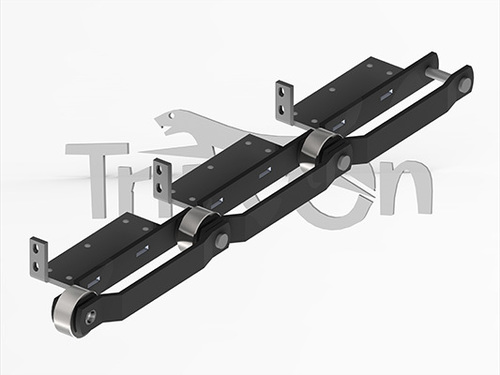
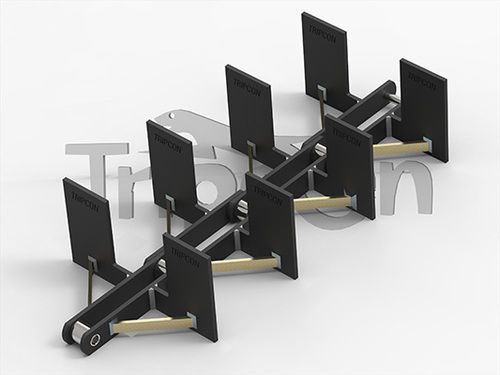
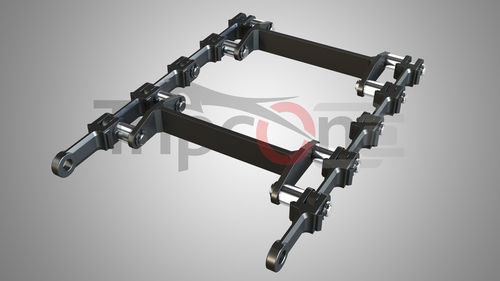
Looking for stainless steel slat conveyor chain, Tripcon Engineering Pvt. Ltd. is the right solution. Our company located in Gujarat, produces this important component of conveyor system. As the very name implies, the slat conveyor chain is developed in stainless steel. The material is often heat treated to achieve low coefficient of friction, higher strength, and durability. Customers can get this conveyor chain with flanged rollers or plain rollers, based on their application requirements. Chain conveyors in which this chain is used can be found in industries, like beverage, electronics, bakery, pharmaceuticals,automotive, packaging, material handling, textiles, etc.
SPECIFICATION
|
Usage/Application
|
Industrial
|
|
Brand
|
Tripcon Engineering
|
|
Material
|
Mild Steel, Stainless Steel, Iron
|
|
Roller Diameter (mm)
|
30-40 (mm), >50 (mm), 40-50 (mm)
|
|
Finish
|
Smooth Finish
|
|
Surface Treatment
|
Polished
|
|
Lubrication Method
|
Oiling
|
Tailored to Meet Industry DemandsEngineered with versatility in mind, our stainless steel slat conveyor chains are ideal for applications across food processing, pharmaceuticals, bottling, packaging, and the automotive industry. With corrosion-resistant SS304 or SS316 construction, these chains not only promise longevity but also deliver tailored solutions for unique operational needs.
Customizable for Precision OperationsFrom chain pitch and slat width to lifting capacity and configuration, our conveyor chains can be precisely customized based on specific process requirements. Multiple installation options are available, including horizontal or inclined, and users can select between polished or matt surfaces to suit operational aesthetics and hygiene requirements.
Designed for Reliable and Efficient HandlingOur conveyor chains are built to withstand demanding working conditionssupporting loads specified by the application, providing high tensile strength, and maintaining low noise levels. The advanced anti-skid surface and heavy-duty build ensure a safe, smooth flow of materials, while easy installation and PLC/manual control options enhance operational efficiency.
FAQs of Stainless Steel Slat Conveyor Chain:
Q: How do I choose between SS304 and SS316 for my slat conveyor chain application?
A: SS304 is suitable for general purposes and environments where corrosion risk is moderate. For applications involving harsh chemicals or saline environments, SS316 is recommended due to its superior corrosion resistance. Assess your industry-specific requirements to make the appropriate selection.
Q: What customization options are available for the conveyor chain?
A: We offer custom slat widths, chain pitches, configurations (straight or curve), slat surface finishes (polished or matt), lubrication methods (self-lubricating or manual), and load capacity enhancements. Conveyors can be tailored in length, lifting speed, and installation type (horizontal or inclined) to meet your specific processing needs.
Q: Where can the stainless steel slat conveyor chain be installed?
A: This conveyor chain is suitable for both indoor and outdoor environments. Its corrosion-resistant stainless steel construction ensures longevity and dependable performance regardless of exposure to moisture or varying temperatures.
Q: What is the maximum operating temperature for this conveyor chain?
A: The conveyor chain is engineered to operate reliably at temperatures up to 200C, making it suitable for processes that involve heat, such as baking or sterilization in the food and pharmaceutical industries.
Q: How is maintenance managed for this conveyor chain system?
A: With options for self-lubrication or manual lubrication, maintenance can be minimized according to your selection. The polished or matt surface finish also aids in easier cleaning, ideal for hygienic environments like food processing and pharmaceuticals.
Q: What are the key benefits of using this slat conveyor chain in industrial processes?
A: Key benefits include high tensile strength, corrosion resistance, low noise operation, adjustable lifting speed, anti-skid surfacing, and ease of installation. These features enhance material flow efficiency, reduce downtime, and provide system longevity, even in heavy-duty environments.



 English
 Spanish
 French
 German
 Italian
 Chinese (Simplified)
 Japanese
 Korean
 Arabic
 Portuguese











 Send Inquiry